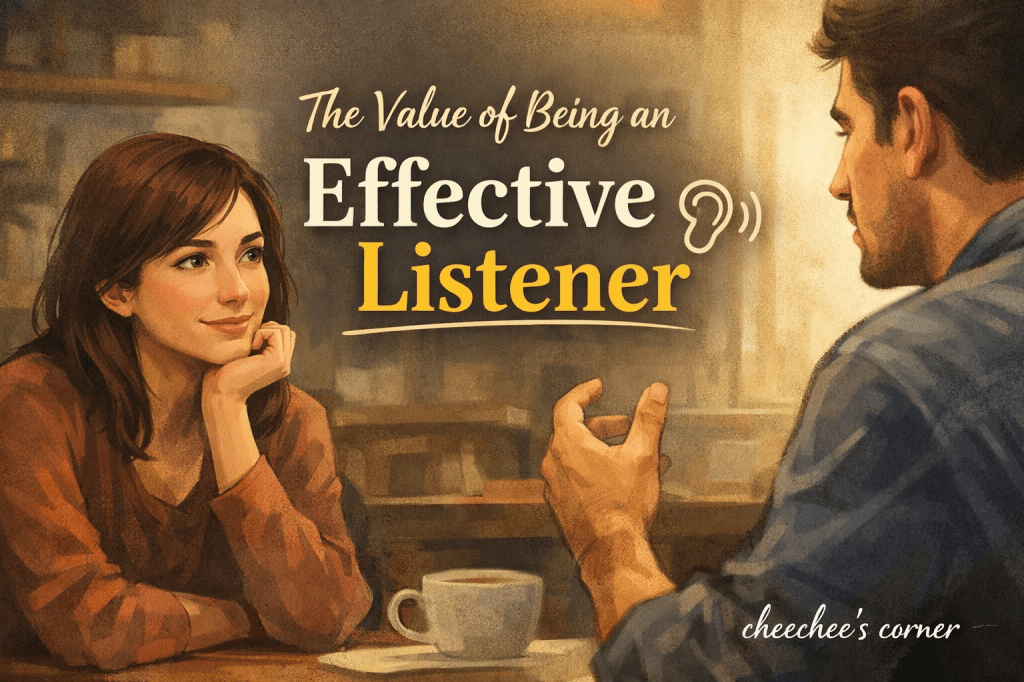
Over the years, I have observed that effective listening is far less common than one might expect. Many people enjoy speaking, sharing opinions, or explaining their perspective. Yet far fewer truly know how to listen.
Listening is not simply hearing words. It is the act of giving someone your full attention, allowing them the space to complete their thoughts, and making the effort to understand what they are expressing. While this may sound straightforward, it is often overlooked in everyday interactions.
There are countless situations that reveal this gap.
- A person begins telling a story, but before they finish, the other person interrupts. Both end up speaking at once, each trying to be heard, but neither truly listening.
- Someone is in the middle of explaining something important, yet the listener interjects prematurely, assuming they already know the conclusion.
- A listener nods and maintains eye contact, but when the speaker finishes, their response is unrelated—revealing they were simply waiting for their turn to talk.
These moments may seem minor, but over time they erode communication. When individuals feel unheard, they gradually stop sharing. Conversations become shorter, less meaningful, and less authentic.
Listening as Respect
An effective listener approaches communication differently. They allow the speaker to finish, resist the urge to interrupt, and take time to process what was said before responding. Listening is not passive; it is an active demonstration of respect. It signals that the speaker’s words matter.
Communication experts often emphasize that misunderstandings rarely arise from disagreement alone. More often, they stem from people failing to truly hear one another. Psychologists note that when individuals feel genuinely listened to, they become calmer, more open, and more willing to engage. Listening fosters emotional safety and validates the speaker’s experience.
Practical Strategies for Better Listening
Here are several habits that can strengthen listening skills:
- Allow the speaker to finish. Interruptions disrupt the flow of communication and often lead to confusion.
- Listen to understand, not to reply. Too often, people listen only to prepare their response. Focus instead on grasping the speaker’s message.
- Ask thoughtful follow-up questions. Simple inquiries such as “What happened next?” or “How did that make you feel?” demonstrate genuine interest.
- Avoid shifting the focus to yourself. While sharing a similar experience may feel like connection, it can inadvertently divert attention from the speaker.
- Be fully present. Set aside distractions. Eye contact, attentive posture, and silence all convey respect and engagement.
Practical Exercises to Build Listening Skills
Like any skill, listening improves with practice. The following exercises can help:
- Reflective Listening: After someone speaks, summarize what you heard before responding. This ensures clarity and shows attentiveness.
- Silent Pause Practice: In conversations, wait two to three seconds after the speaker finishes before replying. This pause prevents interruptions and allows deeper processing.
- Distraction-Free Conversations: Commit to one conversation each day without phones, laptops, or background noise. Notice how much easier it is to stay engaged.
- Question-First Approach: Instead of responding with your own story, ask one clarifying or follow-up question. This shifts focus back to the speaker.
- Listening Journals: At the end of the day, write down one moment when you listened well and one moment when you could have listened better. Reflection builds awareness.
Reflections
These habits may seem small, yet they accumulate into a powerful practice. Listening is not a single act but a discipline that shapes relationships over time. When practiced consistently, it transforms conversations from transactional exchanges into meaningful connections.
Being a good listener does not require agreement. It requires respect—the willingness to hear someone out. In friendships, families, workplaces, and everyday conversations, listening builds trust and strengthens relationships.
In a world where many are eager to speak, the individual who listens attentively often becomes the most respected voice in the room. Sometimes, the most powerful contribution you can make to a conversation is not advice or a clever response, but your undivided attention.
 CHEE CHEE'S CORNER
Leave a comment